Project Based Learning Ideas | High Altitude Weather Balloon

Slide

Labs Outside the Classroom

Allow students to use their creativity to manage a mission to the edge of space utilizing cutting edge wireless technology.


Sign Up For Online Demo
Slide

Unlocking Student Curiosity

StratoStar specializes in fun hands-on wireless systems allowing students to make the world their laboratory, from the edge of space to the earth below their feet.


Sign Up For Online Demo
 
Inspiring the Next Generation of Scientists
project based learning ideas

Blog

  • School's Journey to the Edge of Space: Part 3 - Flight Video

    Posted by: Jason Krueger on May, 07 2012

    This is our last post in the series about the Indian Valley high-altitude weather balloon launch. You've already met the school, the teachers, and some of the students involved (Part 1)  and you've read about what the students learned from the launch (Part 2).

     Something great about StratoStar high altitude balloon launches is how excited it can make the students and everyone else in the community. Ms. North of Indian Valley noted that school administration, including the superintendent, stopped by multiple times during each stage to see how things were going. Parents of the students even showed up to watch the launch and returned to Mission Control to watch footage from the onboard weather balloon cameras. Mr. Jenkins had students that weren't even in his class asking how the experiments were shaping up. When it came time to launch the balloon, students from all four grades watched as the balloon lifted into the sky and disappear into the clouds.

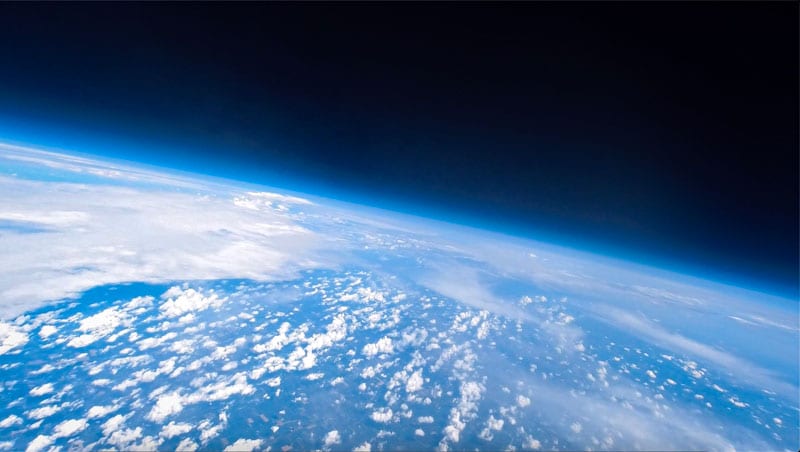
    The launch was incredibly successful and everyone involved had a great time. The students engaged in real world problem solving and got to send experiments into an environment that is usually reserved for NASA scientists. I promised you a video of the launch in the last post so below you will find videos which highlight the entire experience of launching Captian America and Darth Vader to the Edge of Space while collecting real time sensor data from experiments:

    Indian Valley Flight Video:


    Indian Valley Teacher and Student Testimonies:


     Does this experience sound like something you could use to unlock your students' curiosity? Contact us for more information. We would love to talk to you.

    By Jason Krueger
    Twitter @StratoStar4U

 
  • A Daredevil, High Altitude Balloon, and NASA

    Posted by: Jason on May, 15 2012

    There's real and useful science behind high altitude balloons. From weather research to the development of NASA's human space program, the technology that StratoStar makes available to Educators on the front lines of research methodology, education pedegogy and has been used by notable scientists and institutions.

     High Altitude Balloon and Air Force Daredevil

    A very noteworthy use of high altitude balloons was Project Excelsior, a late 1950s effort to develop safe space/flight suits for high altitude aircraft crews (Lockheed U-2 Spy Plane). Testing found that test dummies ejected from high altitudes would spin at nearly 200 RPMs, which would be fatal and could rip a body apart during freefall. Joseph Kittinger, an Air Force captain, was selected to conduct multiple jumps and experiments in manned near space balloons, helping develop a working solution to these issues.

    In order to fully test the suits, they used a high altitude balloon that was 200 feet high with a capacity of almost 3 million cubic feet. It was used to lift a gondola that carried Kittinger into near space.

     Kittinger's first jump (in November 1959) from 76,400 feet nearly ended in tragedy when a stabilizer parachute deployed too quickly. While in his suit, he began to spin at 120 RPMs and lost consciousness, but his main parachute automatically deployed at 10,000 feet, saving his life. Not one to be deterred, Kittinger made another jump three weeks later. This one was from 74,700 feet and was successful, which earned him the A. Leo Stevens Parachute Medal. 

     Problems were not over for Kittinger, however. His final Project Excelsior jump was from 102,800 feet. Pressurization in his right glove malfunctioned, causing his right hand to swell to twice its normal size. Kittinger fell for a total of four minutes and thirty-six seconds and reached a maximum speed of 614 miles per hour.

     The risks and sacrifices made by brave men like Kittinger helped contribute to the numerous successes of NASA and countless scientific advances. NASA would eventually go on to use Kittinger's research to perfect their own environmental suits and systems to keep their astronauts safe beyond Earth's atmosphere. Below you can watch a short video on Joe's expirence with Project Excelsior.

      At StratoStar, we're proud to be a part of this rich history, and we're excited to inspire the next generation of scientists to explore the edge of space. If you could explore near space, what would you set out to learn? Tell us in the comments below!

 
  • School's Journey to the Edge of Space Part1 - Meet the School

    Posted by: Jason Krueger on Apr, 23 2012

    Indian Valley Middle School is in Enon, Ohio, just east of Dayton. We' re dedicating a short series of three blog posts to this launch, to document exactly how StratoStar helps educators Educate, Explore, and Engage students with project based learning (PBL) tools. In this post, we want you to meet the school, the teachers, and a couple of the students.

     Tom Jenkins wanted a hands-on and engaging project for his 8th grade STEM class, and he wanted to challenge them in ways they wouldn't normally be challenged. He looked for a project that would allow to students take control of their own education, give them a process, and let them see it through step-by-step, ending with real, visible results, rather than simply formulating a graph based on hypothetical equations. He decided to implement a  high altitude balloon launch with Stratostar products to provide his class with project based learning examples.

     Mr. Jenkins unlocked student curiosity by dividing his class into small teams. The students designed and planned the entire experiment, starting with brainstorming many different experiment ideas, and determining whether sending that experiment to into the edge of space would affect the outcome. They even picked the places where the cameras would go on the experiment. The variability of the environment at 60,000 feet gave them a unique opportunity to test hypotheses they could never test in their lab on Earth.

     Additionally, Ms. North taught specific ideas in her Algebra I class that directly affected how the project was accomplished, like exponential functions, graphing quadratic equations, and drawing things to scale, to make sure the experiments would fit within the boxes. More than that, though, the project engaged the majority of classes at the school  including science, math, STEM class, and even language arts and history.

     Tyler , an 8th grade student at Indian Valley, was excited about the experiment from the beginning. His team planned to send  crickets into near space, and wanted to design an environment that would allow the crickets to survive the trip. Just the fact that he was able to send something into the edge of space was awe-inspiring to him.

     "For someone to be able to do this at such a young age-it was just a great experience," said Tyler .

     Jessie Garrett, another 8th grader who took part in the experiment, loved the opportunity to work with a team and the excitement that was building around them. Both students said they were interested in becoming scientists in the future.  That's why we do what we do: we want to inspire the next generation of scientists.

     In the next post, we'll talk about the actual launch of the balloon and more about the experiments they sent up into the edge of space. We'll also talk about some of the things we encountered that made this launch particularly exciting.

    By Jason Krueger - Founder of StratoStar
    Twitter: @Stratostar4u